Rust Chicken Guide: Coops, Eggs & Husbandry
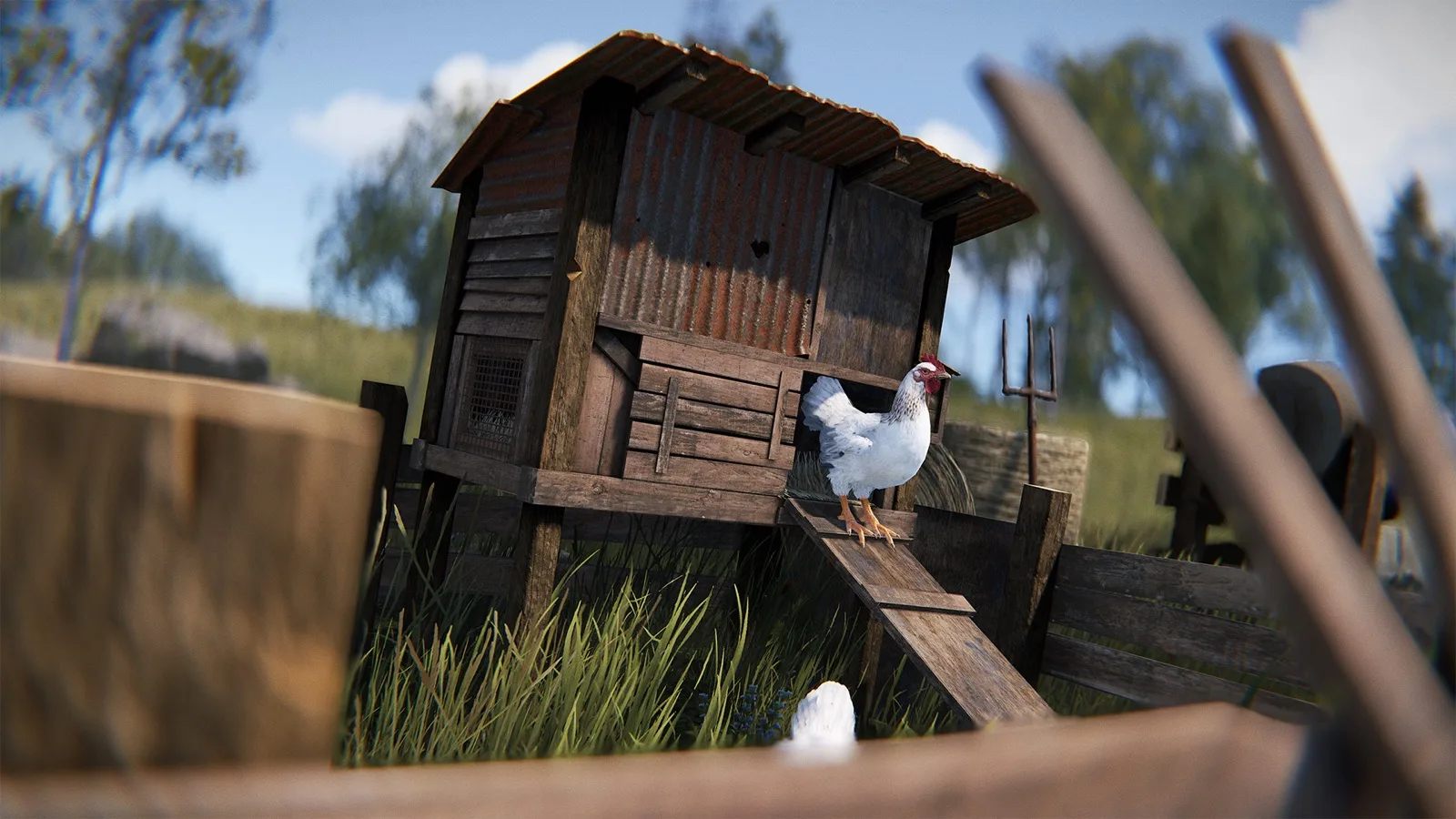
Chickens used to be the joke animal in Rust — a sad bundle of feathers you hit with a rock for cloth and meat. Since the Crafting Update in March 2025 they're an actual husbandry system: you find an egg in the wild, hatch it in a Chicken Coop, keep the bird fed and happy, and it lays eggs for you on repeat. It's cheap, it runs itself once set up, and it bolts straight onto the farm base you're probably already running. Here's how I set mine up and the mistakes to skip.
Wild Chickens: What You're Dealing With
First, the bird itself. Straight from the game files:
| Stat | Value |
|---|---|
| Health | 25 |
| Attack damage | 3 (bite) |
| Attack range | 1.2m |
| Attack rate | 1 per second |
So no, a chicken is not going to kill you. At 25 HP it dies to almost anything, and killing one drops raw chicken breast you can cook. That's the old loop, and it still works for food.
The new loop is better: leave the wild chicken alive. Wild chickens have a chance to drop an egg every minute as long as a player is nearby. That egg is your seed stock. Follow a chicken around for a bit, grab the egg it drops, and you never have to find another one — everything after this point happens at your base.
Step One: Get an Egg, Build a Coop
The whole setup is one item and one found egg.
The egg. Find any wild chicken and loiter near it. The drop is chance-based on a roughly per-minute roll, so it can take a couple of minutes of awkwardly standing near a bird. Bring patience, not a weapon.
The coop. The Chicken Coop is a Workbench Level 1 craft:
| Cost | |
|---|---|
| Craft | 300 Wood, 1 Rope, 75 Metal Fragments |
| Workbench | Level 1 |
| Research | 15 scrap (45 scrap total down the tech tree) |
| Craft time | 30 seconds |
That's early-wipe money. You can have a coop down on day one without cutting into your gun budget.
The hatch. Put the egg into the coop and press the Hatch button. That grows your first chicken, and from here it's a care loop, not a hunt.
Placement: Sunlight Is the Trap
Chickens need sun, and this is the one placement decision that actually matters. A coop buried in a sealed compound room fails the sunlight requirement; a coop in the open is exposed to anyone who wanders past. Same tension as outdoor planters, same answer: put the coop inside your walled compound where it gets sky, not inside the base itself. If you're already running an outdoor grow next to your farm base, the coop lives happily beside it — one trip waters, feeds, and pats everything.
The Four Needs: Keeping Chickens Alive
Each chicken tracks four stats, and the deal is simple: meet the needs and the chicken gains health, neglect them and it slowly loses health until it dies.
| Need | How you meet it |
|---|---|
| Hunger | Keep food in the coop's item slots — chickens eat from them on their own |
| Thirst | Keep water in the coop's slots, same deal |
| Love | Give the chicken a pat on the head every now and then |
| Sunlight | Keep the coop exposed to the sun |
Two of these are passive — stock the slots and forget them for a while. Sunlight is solved once at placement. Love is the one that makes this a husbandry system instead of a vending machine: you have to physically walk up and pat your chicken now and then. Fold it into your farm lap. Water the planters, top up the coop, pat the bird, leave.
Eggs: The Payoff
Keep a chicken happy and it starts laying eggs in the coop periodically. Facepunch has never published an exact rate, so I won't invent one — in practice it's a trickle, not a flood, and it scales with how well you're covering the needs above.
An egg is worth more than it looks:
| Food | Calories | Hydration | Health |
|---|---|---|---|
| Egg | 40 | 15 | +2 over time |
| Cooked Chicken | 40 | 3 | +10 over time |
Same calories as cooked chicken with five times the hydration, no cooking step, and no fire. An egg is one of the few foods that meaningfully covers thirst at the same time, which makes a stack of them a genuinely good roaming snack.
Every egg also gives you a choice: eat it, or hatch it into another chicken. Early on, hatch. More hens means more eggs, and the coop feeds itself upward. Once the coop's producing more than you eat, the surplus is free food forever.
The Meat Side
Sometimes a chicken is worth more dead — a raid's coming, you're starving, whatever. Here's what chicken actually feeds you, from the game's own consumable data:
| Item | Calories | Hydration | Effect |
|---|---|---|---|
| Raw Chicken Breast | 20 | — | 10 poison — cook it first |
| Cooked Chicken | 40 | 3 | +10 health over time |
| Burnt Chicken | 10 | — | barely worth eating |
| Spoiled Chicken | 10 | 2 | 10 poison — don't |
| Chicken Pie | 80 | 15 | +2 health, plus the pie's bonus |
Two things to respect here. First, spoilage: raw meat spoils in 6 hours and cooked meat in 24, and the timer pauses entirely inside a powered fridge — so cook your chicken and refrigerate what you don't eat. Second, the Chicken Pie from the Cooking Workbench is the ceiling on this food chain: double the calories of cooked chicken with hydration on top. The cooking guide covers the workbench, pies, and fridge setup properly.
Where Chickens Fit in a Farm Base
A coop is the lowest-effort producer on a farm base. Planters need water plumbing and genetics work — the farming guide is a whole discipline of crossbreeding and clones. The coop needs a stocked food slot, a water slot, sunlight, and the occasional pat. If you're already doing farm laps for your berries and hemp, chickens are a near-free add-on that pays out in the one resource farms don't produce: a food that hydrates.
And because someone will ask: yes, the Chicken Costume exists — an inflatable chicken suit that replaces your wooden pants, craftable from 25 cloth and 200 wood. It does nothing for your coop. It does everything for morale.
Frequently Asked Questions
How do you get a chicken in Rust?expand_more
Find a wild chicken and stay near it — wild chickens have a chance to drop an egg every minute while a player is nearby. Take the egg home, put it in a Chicken Coop, and press Hatch. That grows your first chicken, and happy chickens lay more eggs in the coop.
What do chickens need to survive in Rust?expand_more
Four things: food and water (stock the coop's item slots and chickens eat and drink on their own), sunlight (keep the coop exposed to the sky), and love (pat the chicken on the head now and then). Meet the needs and the chicken gains health; neglect them and it slowly loses health and eventually dies.
How much does a Chicken Coop cost in Rust?expand_more
300 wood, 1 rope, and 75 metal fragments at a Level 1 Workbench, with a 15-scrap research cost. It's cheap enough to run in the first days of a wipe.
Can you eat eggs in Rust?expand_more
Yes. An egg gives 40 calories, 15 hydration, and a small heal over time — the same calories as cooked chicken but far more hydration, with no cooking required. Or hatch it in the coop to grow your flock instead.
How much health does a chicken have in Rust?expand_more
25 HP, with a 3-damage bite it will almost never land meaningfully. Any weapon kills one instantly, dropping raw chicken breast — but a live chicken laying eggs is worth more than one dead one. One egg, 300 wood, and a sunny corner of your compound — that's the entire buy-in. Set the coop next to your planters, fold the feeding and patting into your farm lap, and eggs just start appearing in a game that usually makes you bleed for every calorie. Most players still treat chickens as target practice. Let them. Yours are working.
More Guides
Cloning copies a plant's exact 6-gene genome with no rolling. How to clone, run a mother plant, keep clones pure, and when to clone vs re-breed.
How Rust plant genetics actually work: the 6 genes, crossbreeding, cloning a god clone, and the best crops to farm. Real tactics, no fluff.
50 Rust tips that hold up under pressure — spawn survival, scrap farming, base building, monument runs, PvP habits, and endgame raiding, with the tools to back each one up.