Rust Quarries Guide: Sulfur, HQM, Pump Jacks & the Giant Excavator
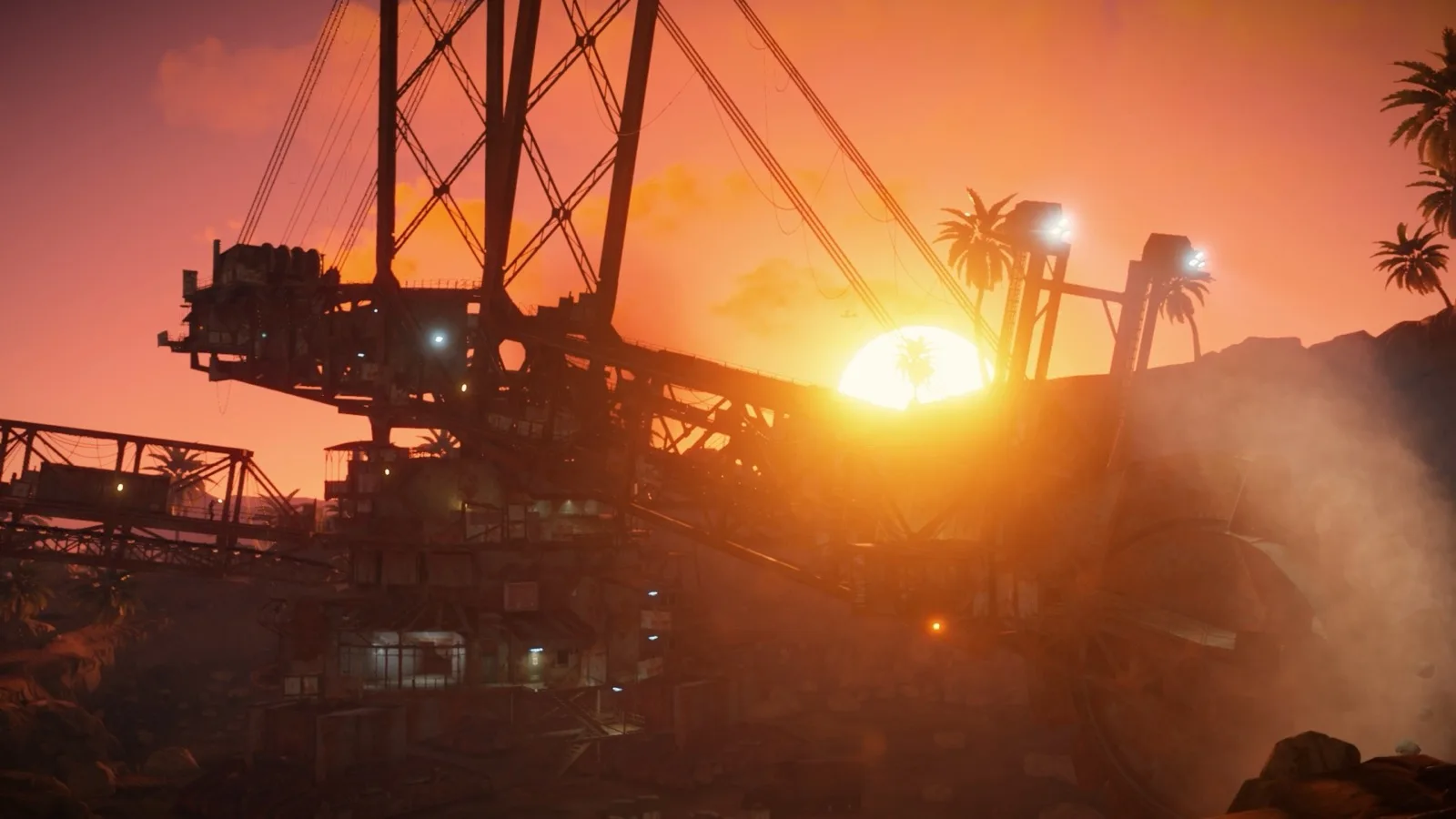
Quarries are passive farming: pour diesel in, come back, haul resources out. While your pickaxe farms one node at a time, a running quarry grinds out sulfur or high quality metal ore the whole time you're off doing something else. The catch is that everything about a quarry is public. It sits at a fixed spot on the map, it makes noise, and everyone on the server knows exactly what you're there to collect. This guide covers the three static quarries, pump jacks, diesel logistics, the Giant Excavator, and when each one actually beats old-fashioned node running.
Quarries Then vs Now: You Can't Craft One
First, the thing that trips up returning players: the Mining Quarry and Pump Jack you remember crafting and plopping down next to your base are gone as deployable items. The item definitions still linger in Rust's files — our datamine of the current build (verified 2026-08-04) finds both, descriptions still telling you to "use a Survey Charge" to prospect a spot — but neither carries a recipe, neither is player-craftable, and you won't find them in our item database of obtainable items. The Survey Charge itself, oddly, is still craftable; it's a relic that outlived the machines it was built for.
What replaced them are static versions baked into the map. Every procedural map spawns quarries and pump jacks as small fixed monuments, and anyone can walk up and run them. You don't own a static quarry. You feed it diesel, it runs for everyone to hear, and whoever is standing there when the hopper fills gets the payout. That shift is the whole strategic game around quarries now: it's not about protecting your machine, it's about controlling a public one for the length of a diesel burn.
The Three Static Quarries
Procedural maps spawn three flavours of static quarry, each named on the in-game map by what it digs up:
| Quarry | Per can of diesel | Why you'd run it |
|---|---|---|
| Sulfur Quarry | 1,000 sulfur ore | Gunpowder, explosives — the raiding pipeline |
| HQM Quarry | 50 high quality metal ore | Guns, armor, tier upgrades |
| Stone Quarry | 5,012 stone + 1,000 metal ore | Base building and upgrades in bulk |
The Sulfur Quarry is the one that matters most and the one that gets you killed most. Sulfur is the raiding currency, so a running sulfur quarry mid-wipe is a beacon: someone is stocking boom. Expect company.
The HQM Quarry is the sleeper pick. High quality metal is slow to farm by hand, and the ore this quarry produces smelts into the HQM that gates most of the gear worth having. Running it early, before anyone is contesting quarries, is quietly one of the better plays on a fresh map.
The Stone Quarry is the one you run when you're building big. Stone by hand is easy enough that this quarry is rarely contested — which also makes it the safest place to burn diesel if you just want volume without a fight.
Running any of them works the same way: load diesel fuel into the quarry's engine, start it up, and let it cycle. Each can of diesel runs the machine for about 2 minutes 10 seconds — a burn is over in minutes, not hours — and the output lands in the hopper for you to collect. The machine doesn't care who started it and doesn't stop for you, so stay until the burn ends or accept that a passerby might collect your ore.
The per-can numbers above aren't scraped from a wiki — we ran the machines. On the current build (verified 2026-08-04), we spawned each static quarry on our own Rust server, loaded exactly one Diesel Fuel, and counted what hit the hopper when the engine died: the Sulfur Quarry pays 1,000 sulfur ore, the HQM Quarry 50 high quality metal ore, and the Stone Quarry 5,012 stone plus 1,000 metal ore — that metal ore side-payment makes the "stone" quarry quietly the best early-wipe metal source nobody guards. The internals agree with the stopwatch: the machine's own config runs 1,000 units of work per can at 40 work per 5-second tick, which is 125 seconds of digging per diesel. Two details worth knowing: output scales linearly (ten cans = ten payouts, no bonus for bulk-loading), and yields are fixed per quarry type — the machine ignores whatever resources happen to be in the ground under it.
Pump Jacks: The Oil Version
Pump jacks are quarries for crude oil. Same deal — static, on the map, diesel-fed, same ~2-minute burn — and one can of diesel pays out 60 crude oil plus 170 low grade fuel (measured on the current build, verified 2026-08-04). That second number surprises people: the pump jack dispenses ready-to-use low grade directly, before you've refined a single crude. The crude's whole job is then becoming more low grade fuel at a refinery. Low grade runs your boats, helis, and furnaces, so a pump jack burn converts diesel into the fuel economy for everything else you do. If you're new to the crude-to-low-grade pipeline, the low grade fuel guide covers refining and whether it beats the animal fat recipe.
The honest take: most players never touch pump jacks because low grade is easy to make from fat and cloth. They earn their keep for groups running vehicle-heavy wipes, where fuel demand outpaces what hunting animals can supply.
Diesel Fuel: The Real Bottleneck
Everything above runs on diesel fuel — the item's own description reads "suitable fuel to power quarries and the giant excavator," and that's the entire job it exists for. Diesel is deliberately scarce. You can't craft it. It spawns as world loot in industrial spots around monuments — including around the quarries and the Excavator themselves — and you can buy it with scrap at Bandit Camp when the RNG isn't cooperating. That's the entire supply chain: loot it on your monument runs or pay for it.
The practical routine: stop hoarding diesel in a box "for later". Diesel only converts to value while it's burning, so treat every can as a scheduled farming session. Collect until you have enough for a meaningful burn, pick your quarry, and go run the whole stack in one sitting with a friend on overwatch. Split burns across multiple trips just multiply your exposure for the same payout.
The Giant Excavator: The Industrial Option
The Giant Excavator Pit is the quarry concept scaled up to a monument. It's a mid-tier monument with medium radiation — hazmat territory — and starting it takes an electrical fuse plus diesel. Once it's powered and running, you pick what it digs and the machine churns out a steady stream of stone, metal, or sulfur while the whole map hears it working. There's a recycler on site too, so component runs and excavator sessions stack neatly into one trip — see the recycler locations page for the full list.
The yields are in the game's own config (verified 2026-08-04): one diesel runs the arm for exactly 2 minutes and digs one full payout of whichever resource you selected — 2,000 sulfur ore, 100 HQM ore, 10,000 stone, or 5,000 metal fragments. Line that up against the small quarries and the Excavator pays almost exactly double per can: twice the sulfur, twice the HQM, twice the stone. Same diesel, twice the boom.
Two things make the Excavator different in kind from the small quarries:
- chevron_rightScale. It's the biggest passive resource engine in the game. A group that keeps the Excavator fed and defended for an evening comes out with the kind of stockpile that decides raids.
- chevron_rightAttention. It's louder, more visible, and more contested than any quarry. The machine announces itself, and every group on the server knows what a running Excavator means. Solo players can snipe a short burn on a quiet server, but holding it is group content.
Bring the fuse, bring the hazmat, bring more diesel than you think you need, and bring people. For layout, loot rooms, and the full monument rundown, the monument pages have you covered.
Quarry vs Excavator vs Farming by Hand
The trade-off triangle, honestly:
- chevron_rightHand farming is safe, private, and always available. Nodes are everywhere, nobody knows your route, and with an ore tea from the tea guide the yields are genuinely respectable. It costs your active playtime, which is the most expensive currency you have.
- chevron_rightStatic quarries trade privacy for passivity. The machine farms while you guard, and the diesel-to-ore conversion is strong — but the location is public, the noise is public, and the output sits in a hopper anyone can empty. Best value early wipe (before contest heats up) and on low-pop hours.
- chevron_rightThe Excavator is the group play. Double the yield per diesel of the equivalent quarry (2,000 sulfur ore per can vs the Sulfur Quarry's 1,000), highest visibility, needs bodies to hold. Solo, it's an opportunistic snack; as a team, it's a war chest.
The meta answer: hand farm and run scrap while you're poor and anonymous, hit quarries once you have diesel and a partner, and take the Excavator when you have the numbers to keep it. Progression, not preference. And if it's specifically high quality metal you're after, recycling weapon bodies usually beats digging for it.
Defense Reality: Loud Means Raided
One rule sits over all of this — a running quarry is a dinner bell. The noise carries, the location is printed on everyone's map, and the people who show up know you either have diesel worth taking or a hopper full of ore worth waiting for. So play it like the fight it is:
- chevron_rightNever AFK a burn. The hopper pays whoever's present, not whoever paid.
- chevron_rightPost someone on overwatch away from the machine. The noise masks footsteps, and quarry campers rely on that.
- chevron_rightFerry the output home in batches instead of letting a full hopper accumulate. Dying with one batch is a cost; dying with the whole burn is a wipe-ruiner.
- chevron_rightOn high-pop servers, burn during off-hours. The same diesel buys the same ore at 4 a.m. with a fraction of the risk.
Frequently Asked Questions
Where is the sulfur quarry in Rust?expand_more
It's a static monument, so the location changes with every map seed. Open your in-game map and look for the "Sulfur Quarry" label — procedural maps spawn it as a small named monument, the same way the HQM and Stone Quarries appear. Once you've found it on your server's map, the spot is fixed for the whole wipe.
Are quarries still in Rust?expand_more
Yes, but only as static monuments on the map. The craftable Mining Quarry and Pump Jack that players used to place at their bases were removed from the game years ago and no longer exist as items. The static Sulfur, HQM, and Stone Quarries — plus static pump jacks for crude oil — replaced them, and anyone on the server can fuel and run them.
Can you still craft a mining quarry or pump jack?expand_more
No. There's no craftable quarry or pump jack in the current item list. If you want quarry output, you run the public static quarries with diesel fuel; if you want crude oil, you run a static pump jack. The days of a private quarry behind your base walls are over.
How much sulfur does the sulfur quarry give per diesel?expand_more
**1,000 sulfur ore per can**, over a burn of roughly 2 minutes 10 seconds. We verified this on the current build (2026-08-04) by running the machine on our own server with exactly one diesel and counting the hopper — it's not a wiki number. If sulfur is the goal and you can hold the site, the Giant Excavator doubles that at 2,000 sulfur ore per can.
Where do you get diesel fuel in Rust?expand_more
Diesel can't be crafted. It spawns as loot in industrial spots around monuments — including at the quarries and the Giant Excavator themselves — and it can be bought with scrap at Bandit Camp. Grab every can you see on monument runs; it's the only input the entire quarry system runs on.
Is the Giant Excavator worth it?expand_more
For a group, absolutely — it's the biggest passive resource engine in the game, and holding it for an evening builds a raid-deciding stockpile. For a solo player it's situational: you need a fuse, a hazmat for the medium radiation, diesel, and enough quiet on the server to run it without getting third-partied. Solo on a busy server, a static quarry is usually the smarter burn. Quarries are the lazy player's farm and the smart player's force multiplier. Hoover up diesel on every monument run, pick the quarry that matches what you're short on, and treat every burn like a fight you've chosen to schedule. The ore is the easy part — walking home with it is the game.
More Guides
50 Rust tips that hold up under pressure — spawn survival, scrap farming, base building, monument runs, PvP habits, and endgame raiding, with the tools to back each one up.
Yes, you can play Rust solo. Here's how to build hidden, avoid zergs, raid on a budget, and pick servers that don't crush you.
How to get cloth in Rust: hemp picking and farming, animal harvesting, and recycling rope, sewing kits and tarp — with real yields and a fastest-route verdict.