Rust Metal Detector Guide: How It Works & What You Dig Up
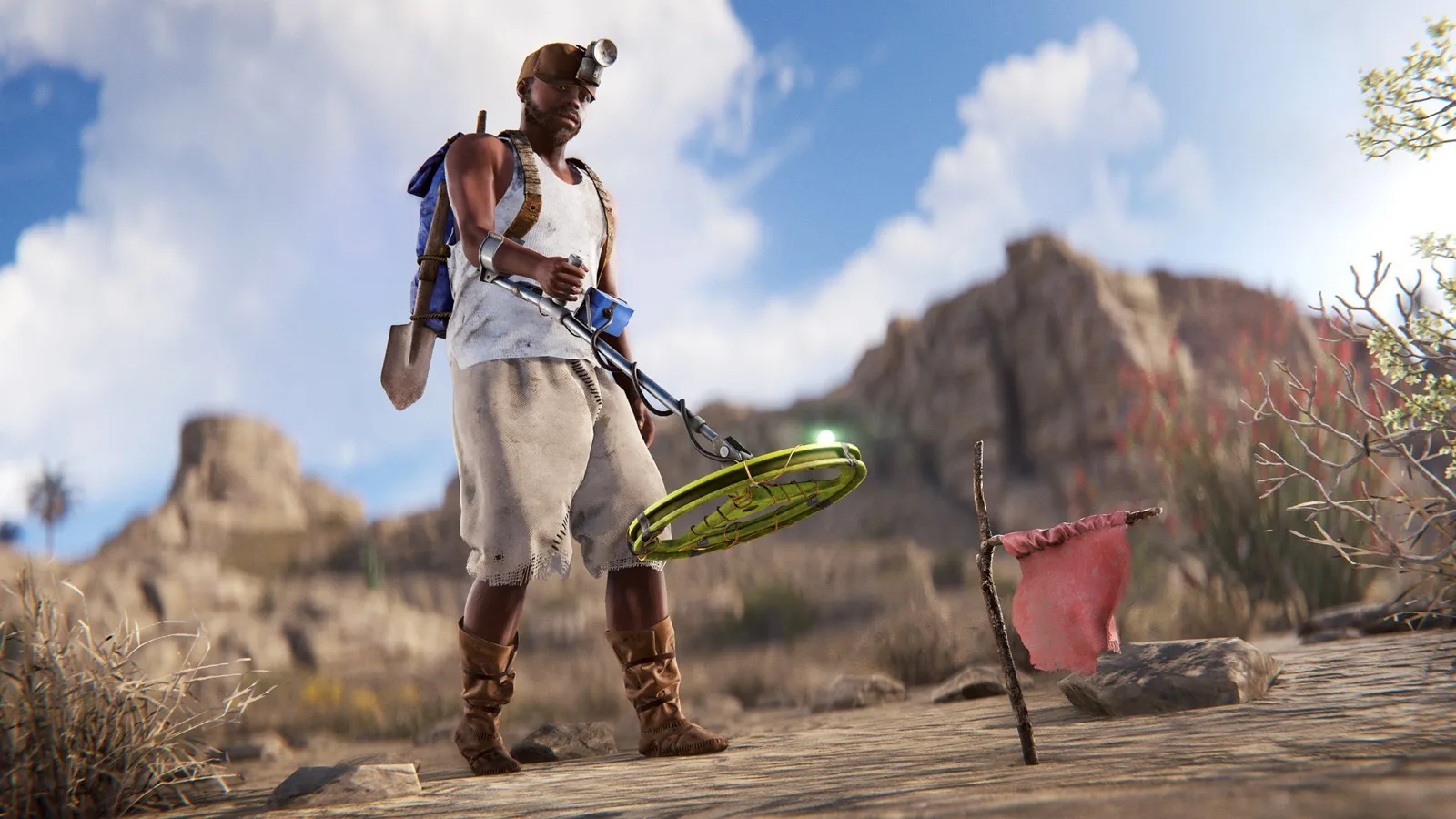
The metal detector is Rust's treasure-hunting tool: sweep it over the ground, follow the beeps until a flag pops, then dig at the flag with a melee weapon to pull loot out of the dirt. It's cheap to get, completely safe to use compared to a monument run, and most players never touch one, which is exactly why it's worth knowing. This guide covers where to get a detector, the detecting loop step by step, what actually comes out of the ground, and my honest verdict on whether it earns an inventory slot.
Where to Get a Metal Detector
You have three routes, and all of them are early-game friendly.
Craft it. The detector is a Workbench Level 1 craft: 2 Rope, 200 Metal Fragments, and 5 High Quality Metal, with a 30-second craft time. That's a trivial cost once you have a furnace running. The HQM is the only speed bump on a fresh wipe.
Research it. 30 scrap at a Research Table, or 30 scrap through the Workbench Level 1 tech tree (about 150 scrap total to path down to it). Either way it's one of the cheapest unlocks in the game.
Loot it. Detectors drop from regular loot rooms and roadside crates — Normal Crates, the Cannon Crate, Wagon Crates, and Underwater Lab crates all carry it — and a spread of scientists (Airfield, Arctic Research Base, Bradley, Cargo Ship, Abandoned Military Base, and the deep-sea spawns) can drop one too. If you barrel-farm at all, one will fall into your lap eventually. Full sourcing is on the item page.
One quirk worth knowing: it doesn't stack, and a dropped detector despawns in 20 minutes per the item data, so grab it quick if you kill someone carrying one.
How to Use the Metal Detector, Step by Step
The loop comes straight from the item's own description: the detector "detects metal objects which may otherwise be hidden," and different areas yield different rewards. Here's how that plays out in hand:
- chevron_rightEquip the detector and hold the sweep. Walk with it out and it scans the ground in front of you as you move.
- chevron_rightWatch for the flash and listen for the beep. When the light flashes or you hear a beep, there's something buried nearby. Stop roaming and start homing in.
- chevron_rightAim at the ground to search. Point the detector at the spot and the detection bar starts filling. Faster, tighter feedback means you're closer to the target; if the bar stalls, adjust your position and sweep again.
- chevron_rightFill the bar until a flag appears. Once the bar tops out, a flag plants itself in the ground marking the exact dig spot.
- chevron_rightDig at the flag with a melee item. Swap to any melee weapon or tool and give the flag a few quick hits to unearth the buried item. No shovel-specific requirement — the trusty rock in your hotbar works.
That's the whole skill ceiling. The only real technique is patience on step 3: people give up on a stalled bar when a half-step to the side would have locked it in.
One more thing the tutorial doesn't tell you: the flag is public. Other players can see a planted dig flag, so a flag you walk away from is an invitation. Dig it or lose it.
Where Detecting Actually Works
Under the hood, buried loot isn't sprinkled randomly — the map generates invisible metal-rich zones, each holding a small cluster of dig sites, and your detector only goes off inside one. You can't see the zones, but you can learn their habits, and community testing since the system launched has mapped the rules of thumb:
- chevron_rightTemperate and desert ground is where the system lives. The arctic biome is the dead zone — sweeping snow is wasted time, which is worth knowing before you plan a detector roam around an ice lake.
- chevron_rightSafe zones don't allow detecting. Outpost and Bandit Camp lawns are off the table, so don't plan on risk-free sweeping inside compound walls.
- chevron_rightThe fringes of monuments are fair game, the monuments themselves aren't. Zones generate up to a monument's boundary but not inside it — the productive line is the grass around the fence, not the concrete past it.
- chevron_rightRoadsides work. Dirt roads and the shoulders of ring roads are classic sweep territory, and they conveniently overlap with the barrel route you're probably running anyway.
The item description is explicit that different areas yield different rewards, so beaches, roadsides, and monument fringes are not interchangeable — treat location as part of the strategy, not just backdrop. And because each zone contains more than one buried target, a successful dig is a reason to keep sweeping the same patch, not to wander off.
What You Actually Dig Up
Here's the honest answer, and it's worth being precise about: we haven't datamined the metal detector's dig loot table yet. Our loot tables are computed from the game's own spawn data (currently verified against game version 2631.286.1), and that dataset covers crates and barrels — the buried-item pool isn't in it. Until it is, we're not going to print percentages we can't verify, because a made-up drop table is worse than none.
What we can say from verified sources and consistent player reporting:
- chevron_rightThe bread and butter is low-tier loot — the kind of scrap, resources, and odds-and-ends you'd expect from roadside farming, pulled out of the dirt instead of barrels. Player-confirmed finds run from metal fragments, scrap, and the occasional High Quality Metal through salvaged tools, jackhammers and chainsaws, road-sign armor pieces, and pistol-tier weapons — roadside-crate loot, in other words, with the odd pleasant surprise.
- chevron_rightLocation changes the pool. The in-game description itself says different areas yield different rewards, so where you sweep is a real variable, not flavor text.
- chevron_rightPlayer-dropped weapons are findable. Facepunch's Harder Core update (August 2025) added the metal detector picking up player-dropped weapons — meaning guns lost to deaths and despawns can resurface under your flag. That's the detector's genuine jackpot case.
When we get the dig table into the datamine pipeline, this section gets the same computed-percentage treatment as our crate pages. Until then, treat any site quoting exact dig-site percentages with suspicion — that data isn't something you can eyeball in-game.
Is the Metal Detector Worth It?
As a primary income source: no. Scrap-per-hour, a detector roam loses to a proper barrel-and-crate loop — if progression speed is the goal, the scrap farming guide is the better playbook.
As a low-risk sideline: genuinely yes. The detector shines in three spots:
- chevron_rightFresh spawn on a beach. You can sweep while you run the shoreline with nothing to lose. Any find is pure profit at zero risk.
- chevron_rightQuiet-server or off-hour play. It's a relaxed loop you can run without fighting for monument spawns.
- chevron_rightThe weapon-recovery angle. Since Harder Core, sweeping high-traffic fight zones can literally dig up someone's lost gun. A free AK out of the sand pays for a lot of boring beeps.
It's also one of the few tools where the fun-per-scrap ratio matters. Treasure hunting is just enjoyable, and at 30 scrap to research and a WB1 craft, the buy-in is low enough that "because it's fun" is a legitimate reason.
If yours breaks, repair is cheap — 40 metal fragments, 1 High Quality Metal, and 12 cloth at a Repair Bench, at the usual 20% max-condition loss per repair, per our item data — and a spare detector recycles into a decent chunk of its frags and HQM back.
Frequently Asked Questions
How do you use the metal detector in Rust?expand_more
Equip it and sweep the ground as you walk. When the light flashes or it beeps, aim at the ground to fill the detection bar; when the bar fills, a flag appears marking the dig spot. Hit the flag with any melee item to dig up the buried loot. Different areas yield different rewards, so where you sweep matters.
What can you find with the metal detector?expand_more
Mostly low-tier buried loot — scrap, resources, and small items — with the pool varying by area, per the item's own description. Since the Harder Core update (August 2025) it can also detect player-dropped weapons, so lost guns can turn up under your flag. We haven't datamined the exact dig loot table yet, so we don't publish drop percentages for it.
Where does the metal detector work best?expand_more
Temperate and desert ground — the arctic biome doesn't spawn buried loot at all, and safe zones block detecting entirely. Beaches, roadsides, and the ground just outside monument boundaries are the productive sweeps; buried targets also cluster, so a successful dig means the surrounding patch is worth another pass.
Where do you get a metal detector?expand_more
Craft it at Workbench Level 1 for 2 Rope, 200 Metal Fragments, and 5 High Quality Metal after a 30-scrap research. It also drops from Normal Crates, Cannon Crates, Wagon Crates, Underwater Lab crates, and a range of scientists, so barrel-farming and monument runs will eventually hand you one. The metal detector won't out-earn a monument loop, and anyone telling you the exact odds of what's under the sand is guessing. But it's a 30-scrap unlock that turns dead beach time into loot, and post-*Harder Core* it doubles as a lost-weapon recovery tool. Keep one in the base, sweep when the server's quiet, and dig every flag — the one time it's a rifle, you'll be a convert.
More Guides
50 Rust tips that hold up under pressure — spawn survival, scrap farming, base building, monument runs, PvP habits, and endgame raiding, with the tools to back each one up.
Yes, you can play Rust solo. Here's how to build hidden, avoid zergs, raid on a budget, and pick servers that don't crush you.
How to get cloth in Rust: hemp picking and farming, animal harvesting, and recycling rope, sewing kits and tarp — with real yields and a fastest-route verdict.