Rust Tool Cupboard Guide: Building Privilege, Upkeep & Decay
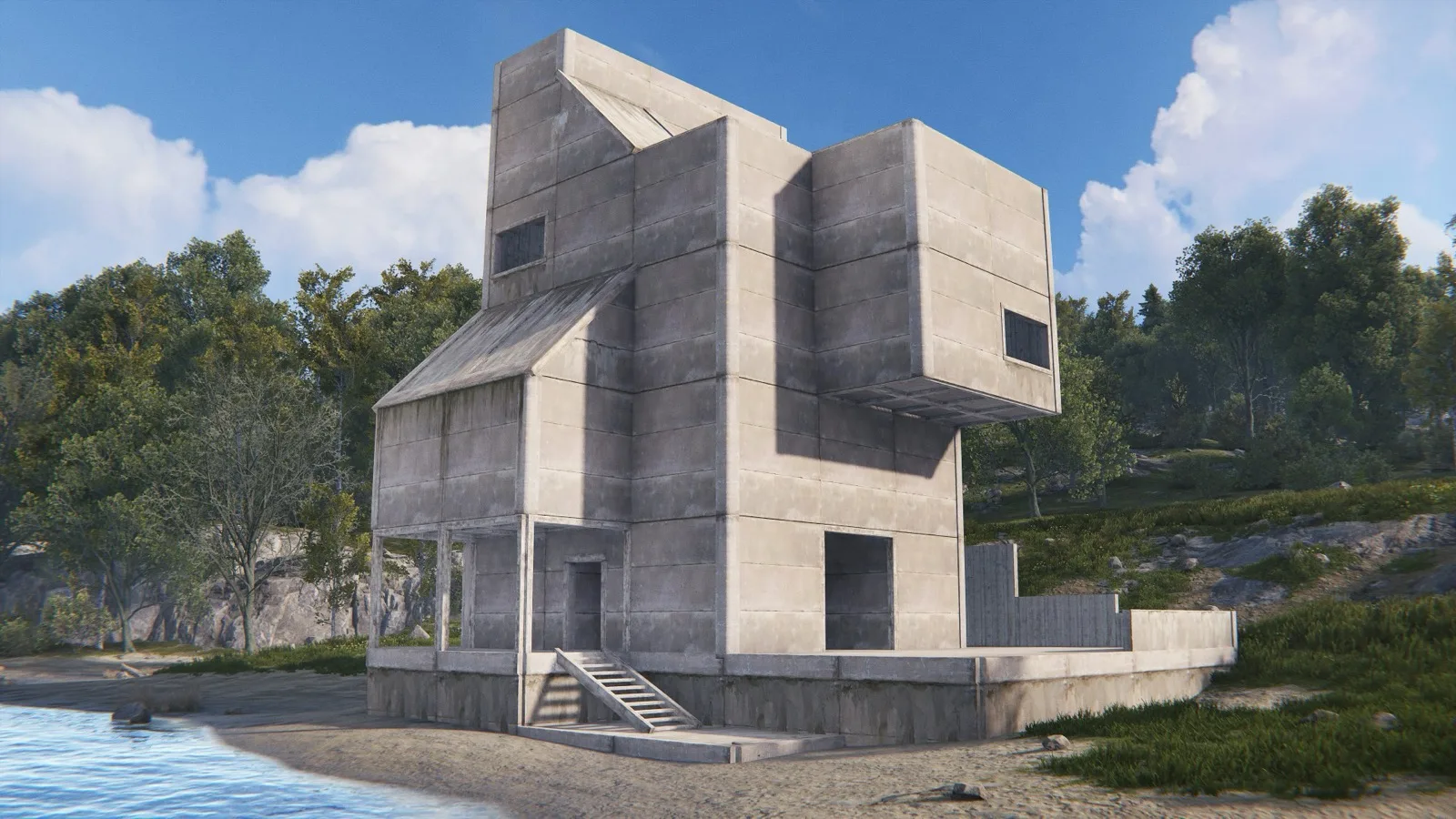
The tool cupboard is the most important deployable in your base, and it costs 1,000 wood. Place it, authorize on it, keep it fed, and your base stands. Lose it, and whoever touches it next owns your walls. Every base you will ever build in Rust is really just an elaborate box around this one item, so it's worth understanding exactly what it does.
This guide covers the three jobs the TC does — building privilege, upkeep, and decay prevention — plus where to put it, how to protect it, and what happens when raiders get to it. If you're still planning the base itself, start with the base building guide and come back here for the TC layer.
What the Tool Cupboard Actually Does
The Tool Cupboard is a default blueprint — no research needed — that crafts from 1,000 wood in 30 seconds at no workbench. Place it and press E to authorize, and you get building privilege in a 50 meter radius around it. Inside that radius:
- chevron_rightYou (and everyone else authorized) can build, upgrade, and demolish freely.
- chevron_rightEveryone else is building blocked. They'll see the "building blocked" message and can't place structures inside your bubble. That's what stops a raider from simply building a staircase up your wall.
- chevron_rightTeammates need to auth too. Privilege is per-player, not per-team. Everyone in your group presses E on the cupboard once, and they're set until the TC is destroyed or someone clears the auth list.
The TC itself is fragile — 100 HP — which is fine, because the whole point of your base design is that nobody hostile should ever be standing next to it. It also holds the resources that pay your upkeep, which is the second job.
One warning before you place it: whoever reaches an unlocked TC can authorize on it and clear your auth list. A raider who gets to your cupboard doesn't just loot it — they take the base. That is why TC placement is the single most important decision in a base layout.
Tool Cupboard Stats at a Glance
The numbers that matter, straight from the item page:
| Stat | Value |
|---|---|
| Craft cost | 1,000 wood (default blueprint, no workbench) |
| Craft time | 30 seconds |
| Health | 100 HP |
| Privilege radius | 50 meters |
| Stack size | 1 |
| Despawn time (dropped) | 5 minutes |
| Recycle yield | 600 wood (radtown recycler) / 400 wood (safe zone) |
| Repair | 200 wood at a repair bench, 500 wood by hammer |
That 5-minute despawn matters more than it looks: if your TC gets destroyed mid-raid, the replacement race is on, and a dropped cupboard on the ground won't wait around.
How Upkeep Works
Once your base is past twig, the TC becomes a tax office. It drains resources every day to keep your structures from decaying, and the bill scales with the size of your base.
The rule of thumb our upkeep calculator is built on: the rate depends on how many building blocks you have. The first 15 blocks cost 10% of their build cost per day, the next 50 cost 15%, the next 125 cost 20%, and every block past that costs 33.3%. The game blends those into one rate and charges it on the whole base, doors included, in the same resources you built with — wood, stone, metal fragments, and high quality metal. A 12-block stone starter that cost 3,600 stone wants 360 a day. A 140-block compound pays about 17% a day on everything. How full the cupboard is doesn't change the rate; it only decides how long the stock lasts.
You don't have to do the math by hand. Open your tool cupboard in game and it lists the build cost and the current upkeep drain per resource — punch those numbers into the upkeep calculator to see your daily bill, or use the base cost calculator before you build to know what you're signing up for.
Two practical consequences:
- chevron_rightEvery wall you place is a recurring cost, not a one-off. Honeycomb and big footprints are great defense, but they inflate the daily tax. Solo players especially should build what they can afford to feed.
- chevron_rightUpkeep runs per-resource. If your stone runs dry but the wood is stocked, the stone parts start decaying while the wooden ones hold. The soonest resource to run out sets your deadline.
Decay: What Happens When the TC Runs Dry
When the cupboard can't pay — or there's no cupboard at all — structures start losing health over time until they're destroyed. Decay isn't instant: the damage ticks gradually across the decay window, and restocking upkeep stops it (repair the damage with a hammer and resources).
How long a structure lasts with no TC coverage depends on its tier. These are the same numbers our decay calculator publishes:
| Tier | Wall HP | Decays in (no TC) |
|---|---|---|
| Twig | 10 | ~1 hour |
| Wood | 250 | ~3 hours |
| Stone | 500 | ~5 hours |
| Sheet Metal | 1,000 | ~8 hours |
| Armored | 2,000 | ~12 hours |
Read that table the way raiders do: an abandoned stone base is standing loot in about five hours, and even armored only buys half a day. It also tells you how long your own base survives a weekend away if the TC runs empty — for most bases, not long enough. Before a break, stock the cupboard well past one day's drain. The full per-tier breakdown lives on the building tier pages.
TC Placement and Defense
Since the TC is both the deed to your base and the wallet paying its rent, it gets the most protected slot in the build.
Bury it in the core. The TC goes in the middle of the base, behind as many walls and doors as your budget allows — never in a room with an exterior wall. Every wall between the front door and the cupboard is boom a raider has to spend.
Honeycomb around it. A ring of extra triangles or squares around your core means raiders blow through filler compartments instead of walking a straight line to privilege. It raises the raid cost specifically on the path that matters.
Consider sealing it. A classic play is the sealed TC: once the base is finished, you wall the cupboard into a chamber with no door at all. You can't top up upkeep without breaking in from the inside (soft-side, then rebuild), so people who run this usually stock it deep first. The trade-off is convenience for security — nobody is walking up and pressing E on a cupboard that has no doorway.
Put a lock on it. The TC accepts a key lock or code lock just like a door. A locked cupboard can't be opened or authorized on by someone who merely reaches it — they have to destroy the lock or the TC itself, which turns a silent base takeover into a noisy one. There's no good reason to run an unlocked TC.
Deny the deep-radius exploit. Your privilege bubble extends 50 meters, but building blocked doesn't stop someone placing twig on your own existing structures. Keep an eye out for twig ladders and stairs stuck to your walls, and demolish them on sight.
The TC Raid
"Going for TC" is its own style of raid. Instead of blowing into your loot rooms, raiders punch the shortest path to the cupboard, destroy or take it, and place their own TC. At that point building privilege flips: you're the one who's building blocked in your own base. They seal the walls behind them, add their locks, and the base — plus everything still in it — is effectively theirs. This is also how "base takeovers" work after a group gets deep enough.
Your defense is exactly the placement advice above: make the TC path the most expensive line in the base, and don't leave the cupboard somewhere a door camper or window peek can reach. If you want the attacker's-eye view of what those walls cost to drop, the raiding guide covers it.
Destroying and Removing a Tool Cupboard
The cupboard itself is the softest target in any base. At 100 HP with barely any resistance to bullets or melee, and outright weakness to explosions, a single explosive of almost any kind removes it — the walls around it are the defense, never the cupboard. Once it breaks, whatever upkeep resources it held spill out as loot, the privilege bubble vanishes, and the first person to place and authorize on a fresh TC owns the zone. The raid calculator has the full cost table if you're pricing the walls in front of it.
Removing your own TC is friendlier: empty it, take the hammer out, and pick it up like any other deployable — handy when you're reshaping the core or moving privilege during a build. You can also simply place a new cupboard elsewhere first if you're extending coverage rather than relocating it.
Multiple TCs and External Compounds
You aren't limited to one cupboard. Larger bases run several TCs, and it's standard practice for two reasons:
- chevron_rightCoverage. One TC covers a 50 meter radius. A big compound — outer walls, external turret towers, a garage — can stretch past a single bubble, so each outbuilding gets its own cupboard to keep the whole footprint under your privilege.
- chevron_rightRedundancy. Separate TCs in external compound corners mean that losing the main cupboard doesn't hand over the outer walls too. Raiders have to take each privilege zone on its own.
Each TC pays upkeep for the structures it covers, so multi-TC compounds multiply the daily tax — budget for it. Groups often keep auth lists deliberately different too: everyone on the main TC, but external turret-tower TCs limited so a compromised teammate can't clear the whole compound.
Frequently Asked Questions
What does a tool cupboard do in Rust?expand_more
It grants building privilege — only players authorized on it can build, upgrade, or demolish within a 50 meter radius, while everyone else is building blocked. It also stores the upkeep resources that stop your base from decaying. It crafts from 1,000 wood with no workbench and is a default blueprint.
How long until my base decays in Rust?expand_more
Without a tool cupboard paying upkeep, decay destroys twig in about an hour, wood in ~3 hours, stone in ~5 hours, sheet metal in ~8 hours, and armored in ~12 hours. The damage ticks gradually across that window, and restocking the TC stops it. A stocked cupboard prevents decay entirely.
How much upkeep does my base need?expand_more
Between 10% and 33.3% of build cost per day, set by block count: 10% for the first 15 blocks, 15% for the next 50, 20% for the next 125, 33.3% beyond, blended into one rate for the whole base and paid in the resources you built with. Your TC shows the exact build cost and drain in game — enter those numbers into our upkeep calculator for your daily bill.
Can you have multiple tool cupboards in Rust?expand_more
Yes. Big bases and compounds run several — one per external tower or outer wall section — because each TC only covers a 50 meter radius. Multiple cupboards also add redundancy: losing one doesn't surrender privilege over areas covered by the others. Each TC pays upkeep for the structures it covers.
What happens if someone gets to my tool cupboard?expand_more
They can authorize on it, clear your auth list, or destroy it and place their own — flipping building privilege so you're the one locked out. That's why the TC belongs in the deepest, most expensive-to-reach part of your base, why it should always carry a lock, and why some players seal it in a room with no door at all.
How do you break a tool cupboard in Rust?expand_more
Almost anything works — the cupboard has only 100 HP, takes close to full damage from bullets and melee, and is actively weak to explosions, so any explosive destroys it outright. Even primitive tools chew through it quickly. The real cost of "breaking a TC" is never the cupboard, it's the walls in front of it — price those with the [raid calculator](/raid-calculator/).
Can you pick up a tool cupboard in Rust?expand_more
Yes. Empty it out, equip a hammer, and pick it up like any other deployable — you need building privilege to do it, which for your own base you already have. Useful when relocating the core during a rebuild. Don't leave it lying around, though: dropped items despawn, and a TC on the floor is gone in about 5 minutes.
Can you put a lock on a tool cupboard?expand_more
Yes — both key locks and code locks fit the TC. A locked cupboard can't be opened or authorized on until the lock or the cupboard is destroyed, which is why an unlocked TC is a takeover waiting to happen. Lock it the moment you place it. Everything else in base building is negotiable — the TC isn't. Craft it before you place your first foundation, bury it in the core, and keep more than a day's upkeep in it at all times. Run your build cost through the [base cost calculator](/calculators/base-cost-calculator/) so you know the daily tax before you commit, and your walls will still be standing when you log back in.
More Guides
A no-BS Rust base design guide: building tiers, upkeep, tool cupboards, bunkers, airlocks and honeycomb, plus the raid costs that actually matter.
Stop your turrets dying at night. Practical Rust electricity guide: rW, solar, wind, batteries, wiring and the only circuits a solo actually needs.
A practical Rust elevator guide: wiring power, stacking pieces, setting up call switches, and fixing dead, misaligned, or won't-stack lifts.