Rust Horse Guide: Taming, Gear, Care & Why Horses Still Matter
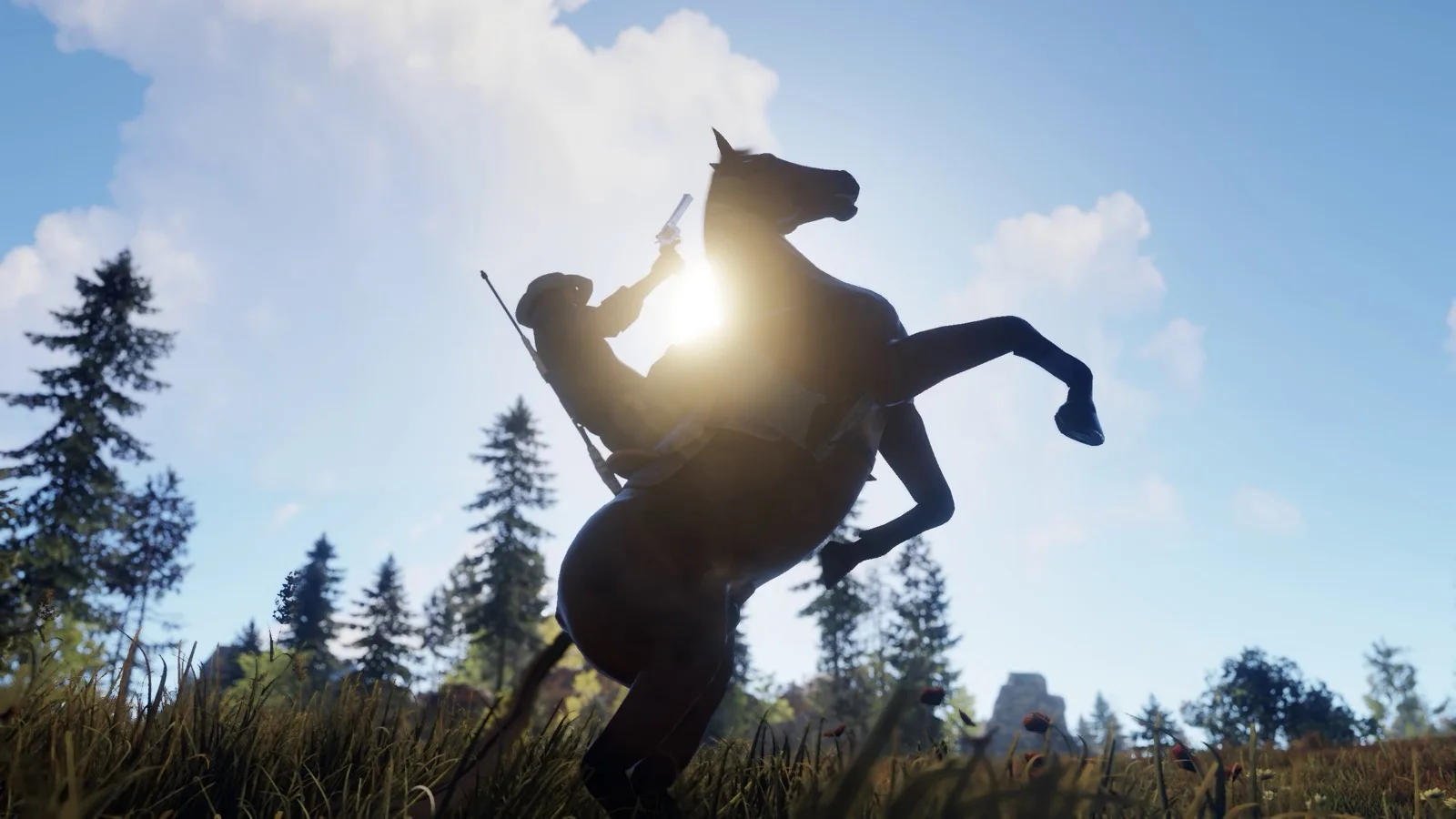
A horse is the best early-wipe vehicle in Rust and it costs you nothing but the walk to find one. No fuel, no engine parts, no key to lose — you climb on, it runs, and it's faster on roads than your legs will ever be. This Rust horse guide covers where horses come from, how to claim one, the shoes and armor worth putting on it, keeping it fed, and the honest cases where a horse still beats a minicopter deep into a wipe.
Horses also got serious attention in the Primitive update (February 2025), which shipped a substantial overhaul: horses can skid, swim, and tow siege weapons — the catapult, ballista, and siege tower all list horse towing in their item descriptions. If you last rode a horse years ago, it handles like a different animal now.
Finding a Horse: Wild vs. Bought
You get a horse one of two ways.
Wild horses spawn around the map, usually near fields and roads. Walk up slowly, mount it, and it's yours — riding it is the taming. No lasso minigame, no treats required to claim it. The only real risk is that another player finds it mid-mount, so check your surroundings before you commit to the animation.
Bought horses come from the horse vendors at the Ranch and Stables monuments. Both are roadside monuments with no radiation, so you can visit them naked at minute one of a wipe. You pay in scrap and ride out on a fresh horse. Buying gets you a horse on demand instead of hoping one spawned nearby — worth it when you need transport now and the fields are empty.
The Ranch and Stables are also where you'll find the vending machines that sell horse gear, so even if you tamed a wild horse, they're worth a stop.
Riding, Leading, and Braking
The controls are simple until the moment they aren't. Tap E to mount a horse; hold E to open the radial menu, which is where the two options everyone misses live. Lead lets you walk the horse on foot — the move for steep or awkward ground where riding fights you. Examine opens the horse's gear screen, and it's how you fit everything in the table below: shoes, armor, saddle bags.
In the saddle: WASD steers, holding Left Shift gallops, and holding Left Ctrl slows you to a stop — with a short skid, because the Primitive overhaul gave horses real momentum. That skid is the thing to respect: braking hard from a full gallop can ragdoll you clean off the horse, so bleed speed first, then stop. Two more physics lessons the game teaches expensively: horses can't jump, and collision damage scales with speed, so a gallop into a fence hurts both of you. The full key list lives on the horse controls page.
Saddles and the Claim System
Here's something that trips up returning players: you don't craft a saddle, and you don't need one to take a wild horse — you mount it directly, and the game's vehicle data lists three seats on a ridable horse, so you can carry passengers. A horse that hauls your teammate and their loot home is a genuinely underrated early-game play.
Saddles do still exist in the item table, though, and it's worth knowing what they're actually for now: claiming. The Single Horse Saddle and Double Horse Saddle both carry the same instruction in their item descriptions — having one lets you claim a horse in a stable by holding E and selecting "Claim." The single is a one-seat saddle, the double seats two, and neither has a craft recipe: they're vendor-side gear, which is one more reason the Ranch and Stables stay relevant. The only saddle-adjacent item you'll craft yourself is the Saddle Bag, which is storage, not seating.
The Stats That Matter
The numbers below are datamined straight from the game files (build 2631.286.1), not guessed:
- chevron_rightHealth: 400 HP. That's tanky for something free — a horse soaks more damage than most early vehicles, and you can check the full entry on the Ridable Horse vehicle page.
- chevron_rightSeats: 3. Rider plus passengers.
- chevron_rightRoad speed bonus. The horse carries a dedicated road speed bonus stat in its vehicle data — horses are measurably faster on roads than cross-country. Ride the road network when you can; it's not just flavor.
- chevron_rightReverse speed factor: 0.6. Backing up happens at 60% pace, so turn around rather than reversing out of trouble.
- chevron_rightTowing speed boost: 1.2. Horses have a towing speed stat for hauling siege weapons — pulling a catapult to someone's door is a real, supported mechanic since Primitive.
- chevron_rightSwimming. Confirmed in the Primitive overhaul. A river is no longer a wall; a deep ocean crossing still wants a boat.
Stamina: The Fuel Gauge You Do Have
"No fuel" isn't quite "no limits" — a horse runs on its stamina core, and the vehicle data ties a speed bonus directly to it, which matches what you feel in the saddle: a well-fed horse with a full core is simply faster than a starved one. Riding hard drains it, feeding restores it, and the datamined stamina-replenish stat is why parking at a stocked trough tops a horse back up without you doing anything.
The one place stamina becomes life-or-death is water. Swimming drains it continuously, and a horse that runs out of stamina in deep water drowns — with you on it, if you're not paying attention. Rivers and bay crossings are fine; "I wonder if it can make that island" is how you lose a good horse. Feed before long rides, watch the core on anything wet, and remember the trough exists precisely so you never start a trip on an empty horse.
A note on breeds, since every horse page on the internet has a speed-per-breed table: horses come in a spread of coats and breed names, and community timing runs have long ranked some faster than others. Our datamined stats come from the single ridable-horse entity the game runs, so we won't print per-breed km/h figures we can't pull from the files — and post-Primitive, the levers that demonstrably matter are the ones above: feeding, stamina, shoes, and how much armor you've hung off it. If two horses are standing at the Ranch, take the one you like; then put shoes on it, because that's the speed difference you can actually buy.
Horse Gear: Shoes, Armor, Storage
The Ranch and Stables sell equipment, and most of it is craftable too. This is the full loadout, with real crafting numbers from the item data:
| Item | Effect | Craft cost | Workbench |
|---|---|---|---|
| Basic Horse Shoes | Extra movement speed | 50 metal fragments | Level 1 (default BP) |
| High Quality Horse Shoes | Extra movement speed | 4 HQM | Level 2 (30 scrap research) |
| Saddle Bag | Extra storage on the horse | 20 leather | Level 1 (default BP) |
| Wooden Horse Armor | Moderate protection, some speed loss | 300 wood, 2 rope | Level 1 (default BP) |
| Roadsign Horse Armor | Strong protection, greatly reduced speed | 4 road signs, 2 sewing kits | Level 2 (60 scrap research) |
How I actually run it: basic shoes on everything — 50 frags is nothing and speed is the whole point of a horse. The saddle bag goes on any horse used for farm runs, because 20 leather for extra carry space pays for itself in one trip. Armor is situational: the item descriptions themselves warn that armor trades speed for protection, and roadsign armor's "greatly reduced movement speed" is no joke. Armor up for a fight or a towing job; stay naked-fast for taxi duty.
Feeding and Care
A horse is a living thing, and a starved horse is a dead horse. Two items handle care:
The Hitch & Trough is the whole care system in one placeable: 200 wood, no workbench needed. Its own description spells out the deal — dismounting your horses at it "will keep them healthy and fed as long as it is kept stocked with food." Build one at your base, dump plant food in it, and hitch the horse there when you're done riding. That's parking and feeding solved for 200 wood.
Bread Loaf gets a specific callout in the item data: feeding one to a horse boosts its digestion and dung production for a short time. That matters because Horse Dung is a real item — "fresh and fertile," as its description cheerfully puts it, stacking to 100 — and it's the input side of a quiet little economy: dung goes into a Composter, the composter turns compostables into fertilizer, and fertilizer feeds your farm. A hitched, bread-fed horse is a fertilizer machine that also happens to be transport. Serious farm bases keep a horse for exactly this reason, and it's the closest Rust gets to agriculture having a supply chain.
Beyond those two documented items, keep the trough stocked with produce and the horse handles itself. And no, you can't breed horses — there's no horse breeding system in Rust. Every horse is found or bought, never born.
One grim footnote from the food data: a killed horse drops raw horse meat, which poisons you raw but cooks into a solid 45-calorie meal with health regen. Your noble steed is also 20 stacks of emergency rations. Rust remains Rust.
When a Horse Beats a Vehicle
Late-game players write horses off, and they're wrong to. The horse's edge over powered vehicles comes down to three things:
- chevron_rightSilence. A minicopter announces you to the whole grid. A horse is near-silent — for sneaking to a monument or scouting a raid target, nothing powered comes close.
- chevron_rightNo fuel. Every boat and heli run starts with a low grade check. A horse runs on trough food you grow yourself. Early wipe, before your scrap engine is running, that's the difference between moving and walking.
- chevron_rightIt's expendable-cheap. Losing a horse costs you a walk to the Ranch. Losing a heli costs you a fortune.
The honest limits: a horse can't cross the ocean and can't fly. When the job is oil rig or a far island, that's boat territory, and when raw map-crossing speed matters more than stealth, read the flying guide instead. My actual loadout most wipes: a horse for the first two days and for anything sneaky, then vehicles for range — and the horse stays hitched out back the whole time, because it costs nothing to keep.
Frequently Asked Questions
How do you tame a horse in Rust?expand_more
Walk up to a wild horse slowly and mount it — riding it claims it. There's no taming minigame or item required. Wild horses spawn near fields and roads; if you can't find one, buy a horse with scrap from the vendors at the Ranch or Stables monuments.
What do horses eat in Rust?expand_more
Stock a Hitch & Trough (200 wood, no workbench) with food and hitch your horse to it — the item's own description confirms it keeps hitched horses healthy and fed. Bread Loaves are specifically noted in the item data as a horse treat: feeding one boosts the horse's digestion and dung production, which is handy if you compost for farming.
How fast are horses in Rust?expand_more
Faster on roads — the horse's vehicle data includes a dedicated road speed bonus, so stick to the road network for long trips. Horse shoes (basic at 50 metal fragments, or a high quality version at 4 HQM) add movement speed on top, while wooden and roadsign horse armor slow the horse down in exchange for protection.
Where do you buy a horse in Rust?expand_more
At the Ranch or Stables monuments — roadside, radiation-free monuments that host the horse vendors. You pay in scrap and ride away. Both monuments also sell horse equipment like shoes, armor, and saddle bags, so they're worth visiting even if you tamed a wild horse for free. Saddle items sold there double as claim tokens: per their item descriptions, holding one lets you claim a stabled horse with the hold-E "Claim" option.
Can horses swim in Rust?expand_more
Yes — swimming shipped with the Primitive overhaul, so rivers and shallow crossings no longer end a ride. The catch is stamina: it drains while swimming, and a horse that exhausts its stamina in deep water drowns. Cross rivers freely, but leave ocean distances to an actual boat.
How many players can ride one horse?expand_more
The horse's datamined vehicle data lists three seats — a rider plus passengers — so a single horse can move a small group's scouts or carry a teammate and their loot home. Passenger seating is also what the Double Horse Saddle is for on stabled horses, per its item description. A horse won't win you the wipe, but it wins you the first days of it: free, silent, 400 HP of transport that runs on vegetables. Grab one early, throw basic shoes on it, build the 200-wood trough, and you've got a vehicle before anyone else has an engine.
More Guides
50 Rust tips that hold up under pressure — spawn survival, scrap farming, base building, monument runs, PvP habits, and endgame raiding, with the tools to back each one up.
Yes, you can play Rust solo. Here's how to build hidden, avoid zergs, raid on a budget, and pick servers that don't crush you.
How to get cloth in Rust: hemp picking and farming, animal harvesting, and recycling rope, sewing kits and tarp — with real yields and a fastest-route verdict.